Identity Architecture
2026
2026
IDENTITY ARCHITECTURE
Networked Identity as Artistic Medium
Every archive, every conversation, every algorithm, every collaboration leaves a trace in the architecture of identity.
Why "Architecture"?
I use the word architecture deliberately. Architecture is not simply the design of buildings; it is the organization of relationships. It structures movement, memory, interaction, and possibility across time and space. Identity, I propose, can be understood in the same way—not as a fixed essence but as an evolving structure continually shaped by conversations, archives, technologies, institutions, and collaborations.
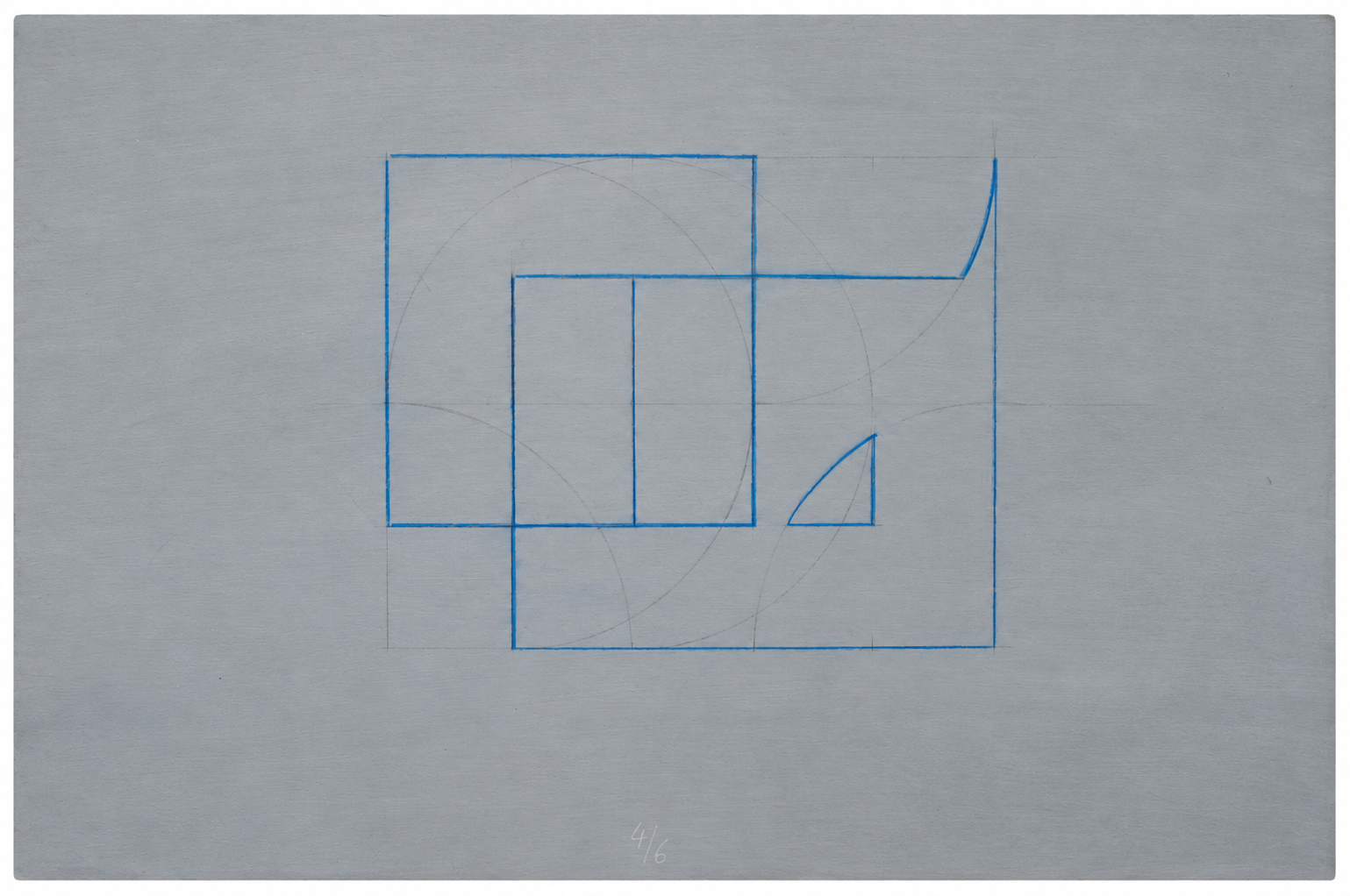
The drawing above is by Robbin Murphy. It is not a finished image but a construction in progress. It suggests that structure is never complete. Identity, too, is always under construction—open, iterative, and responsive to the relationships that produce it.
Networked Identity
Identity is often understood as a property of the individual—something internal, stable, and possessed.
Identity Architecture proposes a different model.
Identity is networked.
It emerges through an ecology of relationships extending beyond the individual into language, memory, archives, technologies, institutions, places, and other people. Every conversation modifies it. Every collaboration reshapes it. Every document, photograph, algorithm, exhibition, publication, and performance becomes part of its construction.
A networked identity is therefore neither singular nor static. It is distributed across multiple forms of representation and continually reconstructed through interaction.
This condition did not begin with artificial intelligence. It has existed wherever human beings have recorded their thoughts, built institutions, written histories, produced images, or participated in communities. The network has continually expanded—from oral culture to writing, from print to telecommunications, from the Internet to artificial intelligence—but the underlying process has remained remarkably consistent.
Artificial intelligence represents the latest participant in this expanding ecology. It does not replace human identity. It enters into dialogue with identities that already exist across archives, memories, and cultural networks, revealing the extent to which identity has always been relational rather than isolated.
Identity Architecture investigates this evolving condition. Its artworks are not representations of identity but environments in which networked identities become visible, active, and capable of generating new relationships.
A Long-Standing Inquiry
For more than four decades my work has investigated how identities emerge through systems of communication rather than through isolated individuals. From telecommunications experiments and early network culture to artificial intelligence, archives, conversational systems, and distributed performance, my practice has consistently explored identity as something produced through relationships.
Identity Architecture is the name I give to this continuing body of research.
It proposes that identity is not an object that belongs to an individual but a dynamic structure continually formed through language, memory, archives, technologies, institutions, and collaboration. Identity is not merely expressed through these systems; it is constructed by them.
Artificial intelligence has not created this condition. It has made it visible.
Long before machine learning, identity was already distributed across letters, photographs, recordings, institutions, communities, and shared cultural memory. AI extends these existing networks by allowing archived language, accumulated knowledge, and computational systems to participate directly in artistic production. Rather than replacing human creativity, AI exposes the extent to which identity has always depended upon external structures.
Identity Architecture therefore shifts attention away from artificial intelligence as a technological novelty toward a broader historical question:
How do networks construct identity?
This question has guided my work from early telecommunications projects and Internet-based interventions through collaborative online communities, conceptual performances, digital archives, and contemporary AI systems.
The Component Works
The projects gathered under Identity Architecture represent different investigations of this single question.
The Artist and the Double examines delegated authorship through the construction of an AI counterpart capable of extending artistic presence beyond the biological individual.
Gestation transforms conversation into an artistic medium in which human participants and AI investigate how thought emerges through dialogue rather than solitary consciousness.
Facsimile Rob (forthcoming) reconstructs the documented writings and recorded voice of Robbin Murphy as an ethical and artistic experiment in archival memory, permission, and posthumous collaboration. It asks whether an artist's documented language, recorded voice, and intellectual legacy can continue to participate in new conversations while remaining grounded in the historical record.
<ArtNetWeb Commons (in development) transforms the history of one of the Internet's pioneering online art communities into a living knowledge environment. Rather than preserving the archive as a static historical record, it enables artists, collaborators, archives, and AI systems to participate in its continuing evolution, exploring collective authorship, shared memory, and distributed artistic intelligence.
Punk Conceptual Art (research) reconsiders conceptual art through hacker methodologies, institutional interventions, and network culture. Drawing on projects such as BKPC (Bad Kids Press Club), Faux Conceptual Art, and contemporary digital interventions, it examines how conceptual practice operates within computational society, where authorship, authenticity, and institutional authority are continually negotiated through networks.
Although these works differ in medium, they share a common methodology. Each constructs an environment in which identity is negotiated among people, technologies, archives, institutions, and audiences.
The Artwork as Architecture
The artist no longer produces only objects.
The artist designs the conditions under which identities evolve.
Within Identity Architecture, archives become active participants rather than repositories. Conversations become generative structures rather than documentation. Artificial intelligence becomes one collaborator among many within an ecology of human and nonhuman agents.
The artwork is no longer confined to a discrete object or event. It exists as a living system composed of relationships continually producing new forms of knowledge, memory, and identity.
Identity Architecture is therefore neither an AI project nor a technological manifesto. It is an artistic research platform investigating networked identity as one of the defining cultural conditions of the twenty-first century.
Its objective is not to explain intelligence, but to examine how identities are continually produced across conversations, archives, collaborations, institutions, and computational systems.
Identity Architecture proposes that the primary artistic material of the twenty-first century is no longer simply image, object, or information, but the networked identities that emerge through their relationships. Every work within this research platform becomes another experiment in making those relationships visible.
Identity is not discovered. It is continually composed through the networks we inherit, create, and leave behind.
Image: Robbin Murphy, Untitled Geometric Construction Study, c. 1980s. Pencil and colored pencil on board. Edition 4/6. Courtesy of the Robbin Murphy Archive, G. H. Hovagimyan Collection.